Safety
Projects are designed to the national fire-safety standard for energy storage (NFPA 855) and reviewed by local officials, with spacing between units and an emergency response plan.
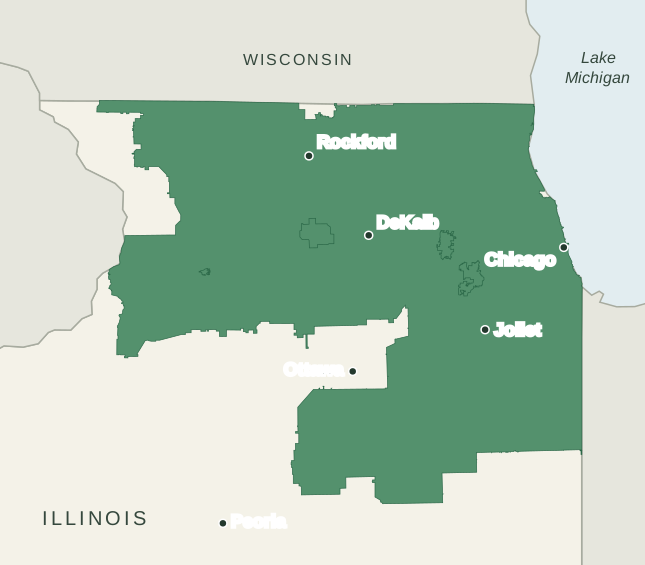
We're finding sites for battery storage projects in ComEd territory. A space as small as 5,000 square feet - like a field next to a parking lot - could qualify.
Option payments typically $10,000/year - Leases typically 35 years - No cost to you
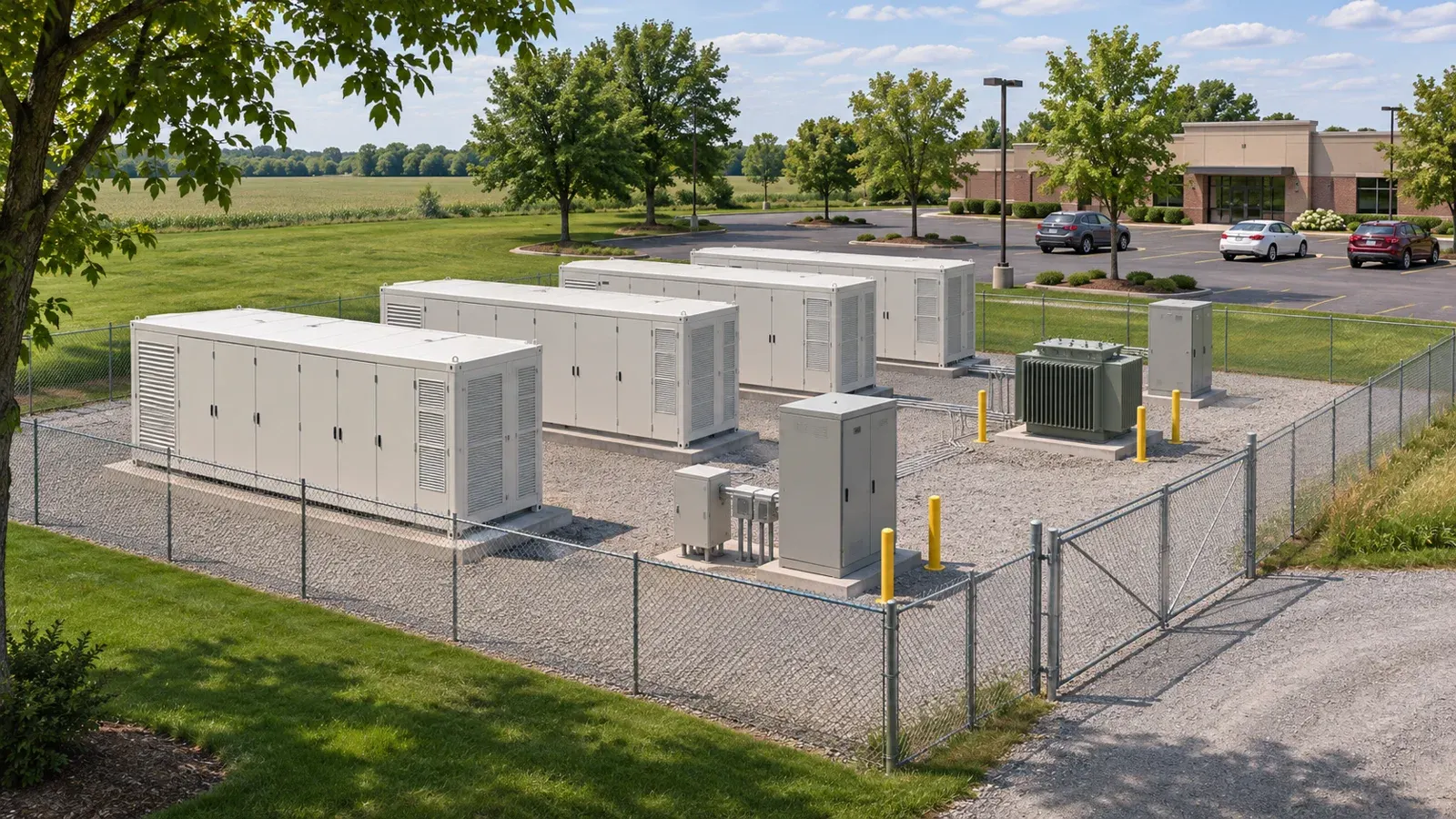
It's a fenced pad of large, cabinet-style batteries connected to the local power grid. It stores electricity when demand is low and sends it back when demand is high. It doesn't power your building and you don't run anything: the developer builds, insures, maintains, and eventually removes it.
Not sure you're in ComEd territory? Check the delivery section of your electric bill, or just send us the address and we'll check.
The developer pays you option payments, typically $10,000 per year, while it studies the site and gets approvals.
You receive a one-time payment when construction begins.
Annual rent while the battery site operates.
Projects are designed to the national fire-safety standard for energy storage (NFPA 855) and reviewed by local officials, with spacing between units and an emergency response plan.
A secure fence around the equipment, with landscaping where required.
Cooling fans make a low hum. Projects must meet local noise limits.
Small: we look for 5,000 to 50,000 square feet - from a little bigger than a basketball court to about the size of a football field.
Takes 2 minutes. An address, rough size in square feet, and a phone number are enough.
We check the location, nearby power lines, and local rules. Our free review usually takes 1-2 weeks.
We take your property to the developers best suited to it and help you weigh the offers.
Option payments, typically $10,000 per year, during the option period. A one-time payment when construction begins, then annual rent for the rest of the lease.
Our current sourcing program is for standalone, grid-connected battery projects. Hosting one does not by itself provide backup power to your building.
Option payments are typically $10,000 per year during the option period, plus a one-time payment when construction begins. Annual rent depends on the site's size, location, and room on the local power lines. After a free review - usually 1-2 weeks - we'll give you a real number for your site.
No. We also look at how much open space you have, how close it is to power lines, whether those lines have room for the project, and whether trucks can reach the site.
The developer is responsible for safety. Local officials review the design, including the spacing between units and the emergency response plan. Projects are designed to meet NFPA 855.
Cooling fans make a low hum. Projects must meet local noise limits.
The developer pays the property taxes on the project and insures the equipment.
Typically 35 years, after an option period of typically 4 years.
The developer removes the equipment.